Launch offer — valid today only

📄 Digital book in PDF · read it on your phone or print it

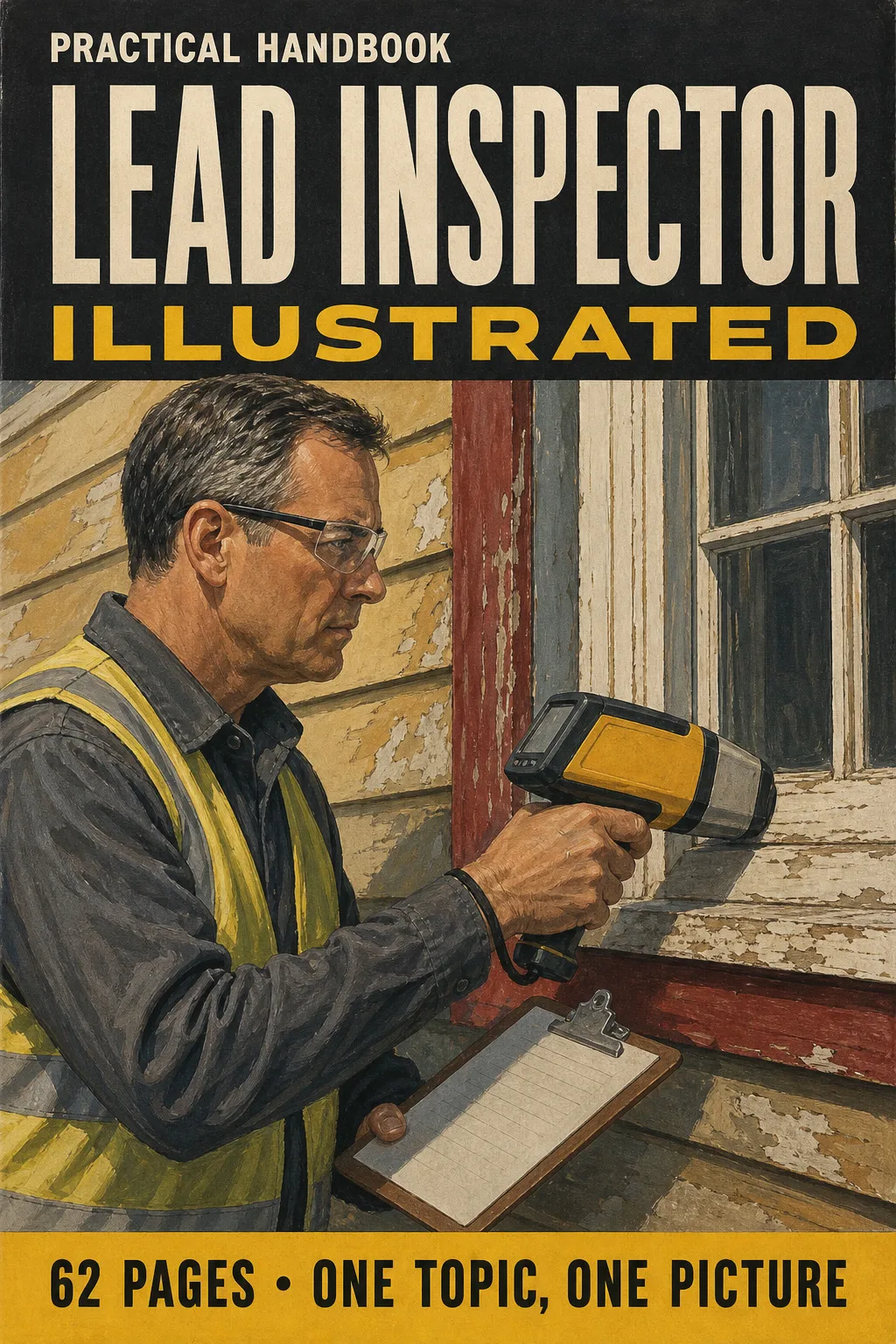
Lead Inspection, Risk Assessment and 40 CFR 745 in Drawings One Field Step on Every Page

XRF readings, paint chips, dust wipes, soil sampling, room equivalents, hazard standards, interim controls vs abatement and clearance. Every topic gets its own page: the drawing first, then what you need to remember. 62 illustrated pages.

START STUDYING THIS WAY

🔒 Secure checkout · PDF by email · 30-day guarantee

Every topic, its own pageEach field step drawn, with the explanation right beside it
62 illustrated pages8 parts, from why lead still matters to your truck checklist
Up-to-date sourcesEPA 40 CFR Part 745 with the 2024 dust-lead rule, HUD 24 CFR Part 35 and the HUD Guidelines
PDF by emailFormat

Look Inside the Book

Every page has one big drawing and a box with the numbers and steps you need to know:

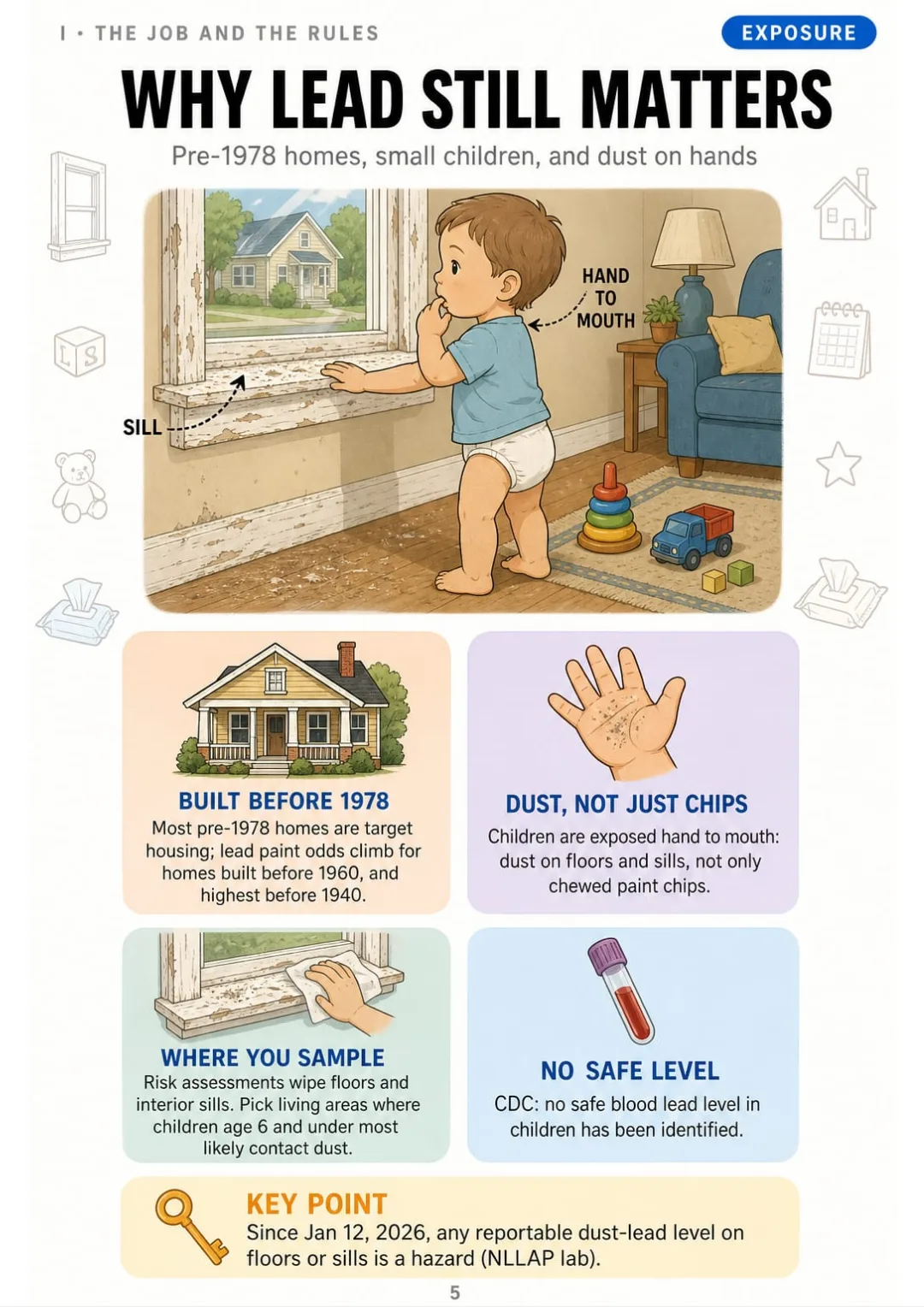
Pre-1978 homes: dust from sill to hand to mouth is the pathway you sample.
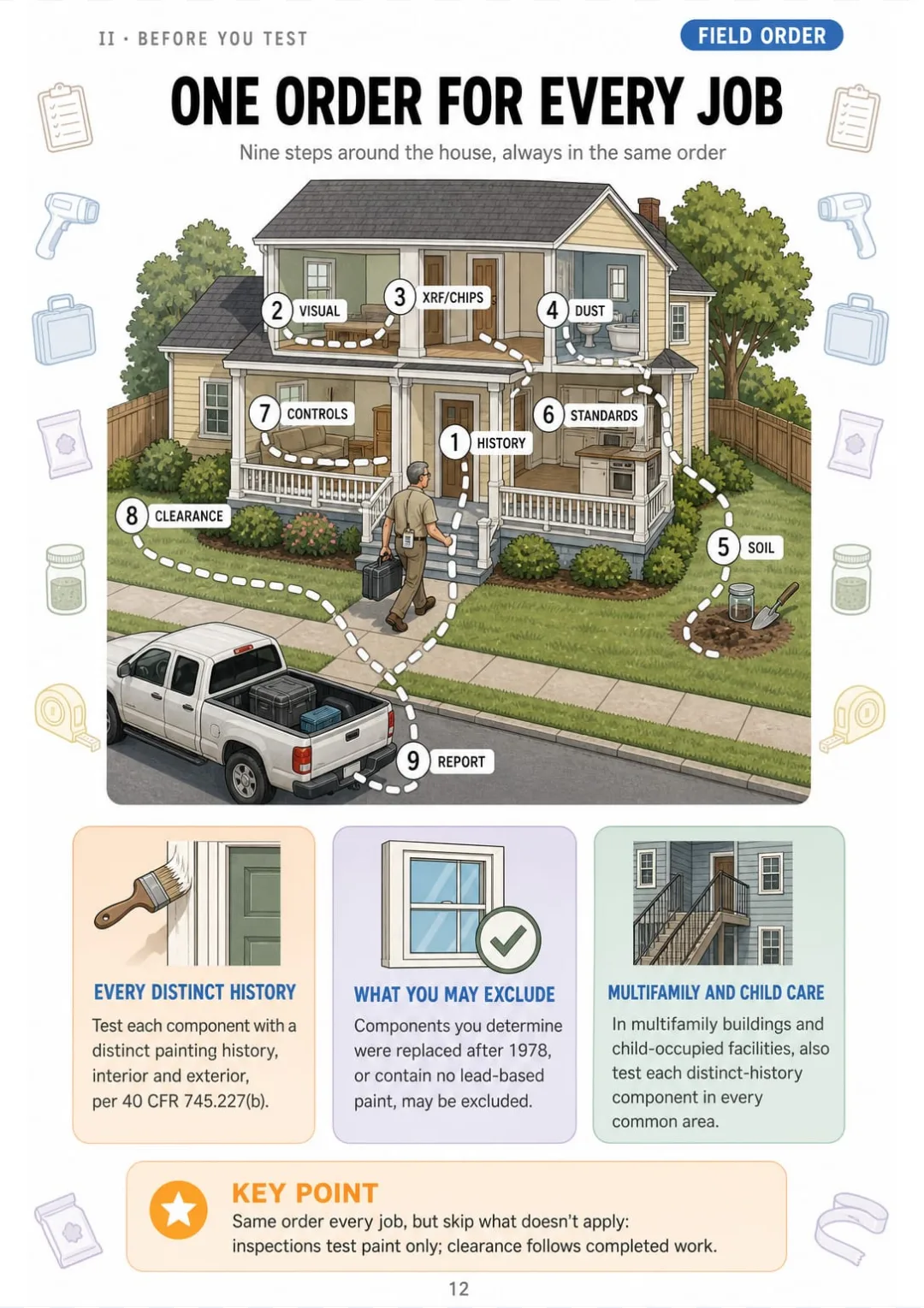
History → visual → XRF/paint chips → dust → soil → standards → controls → clearance → report
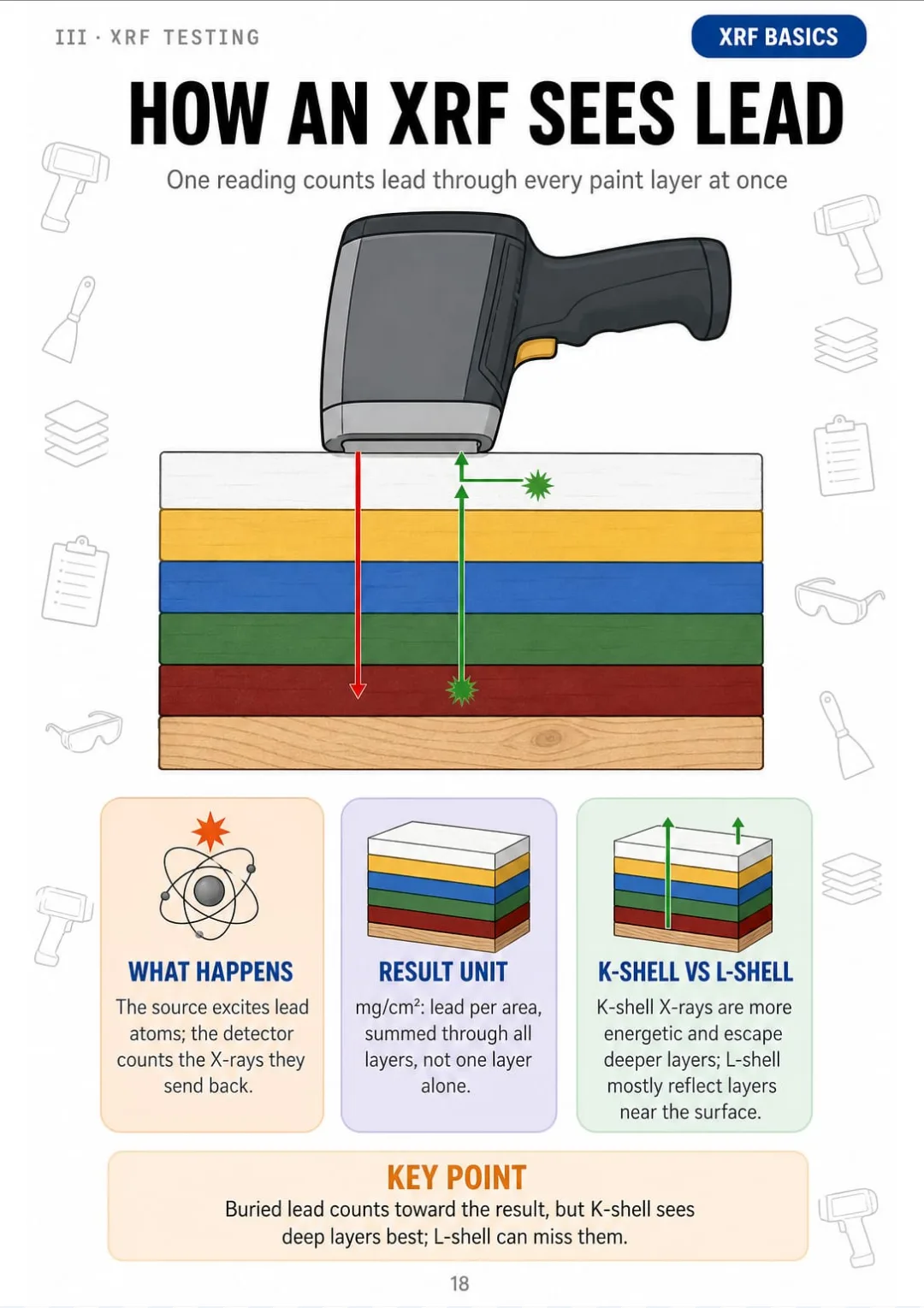
Source in, X-rays back, result in mg/cm² through all paint layers.
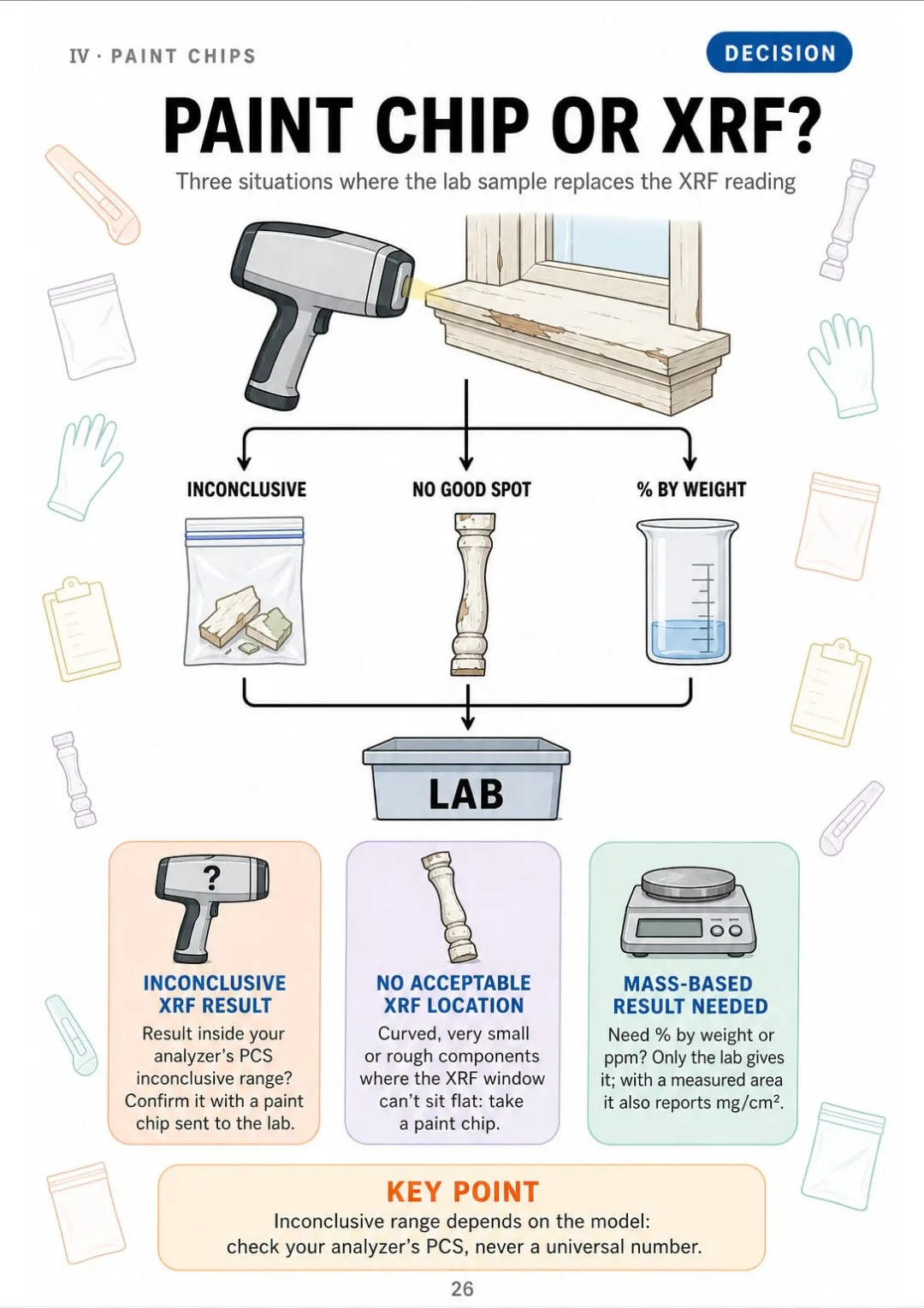
Inconclusive XRF or no acceptable XRF spot → paint chip to the lab (HUD Guidelines, Ch. 7)
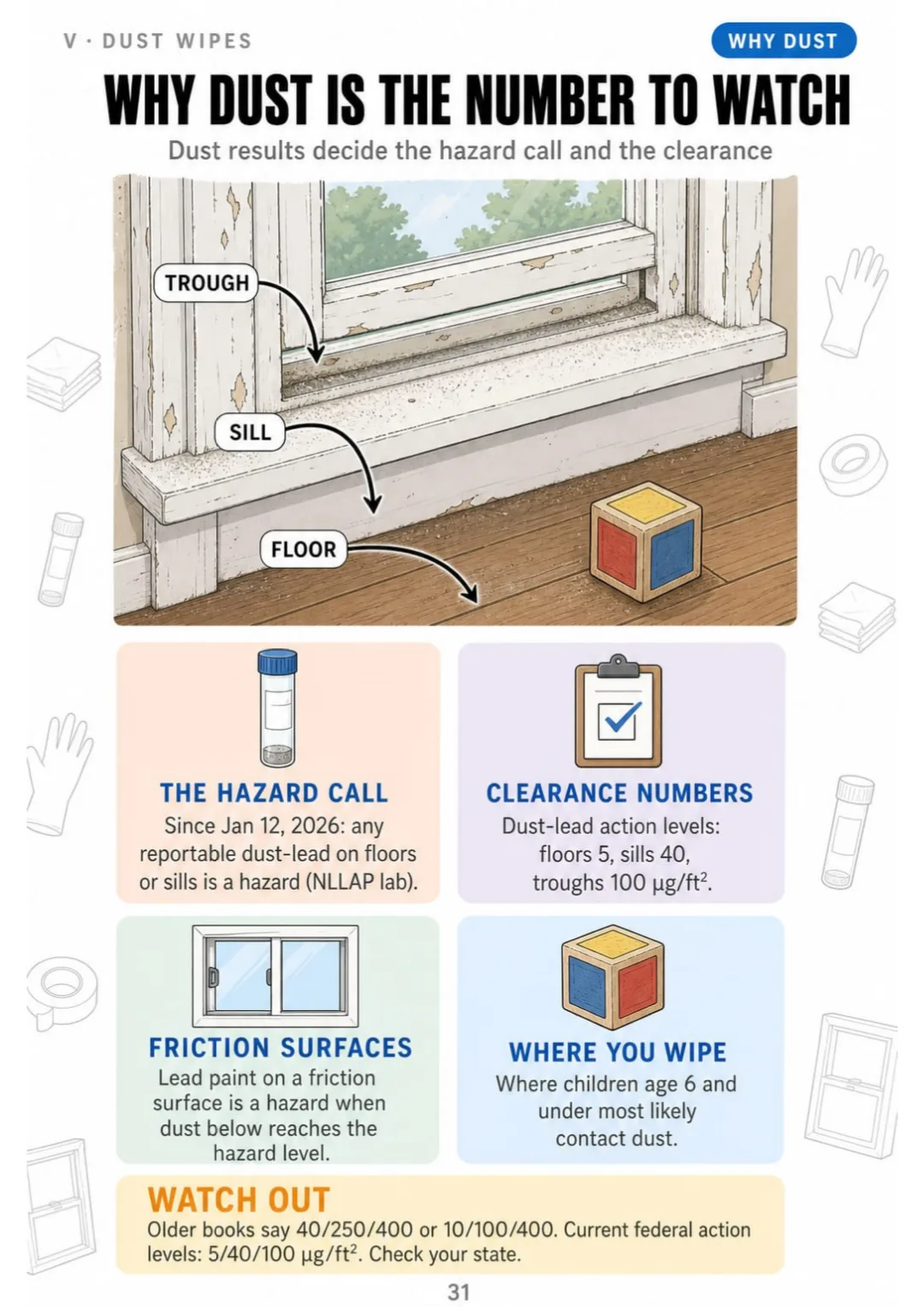
Since 2026: any reportable dust-lead on floors or sills is a hazard; clearance at 5/40/100 µg/ft².
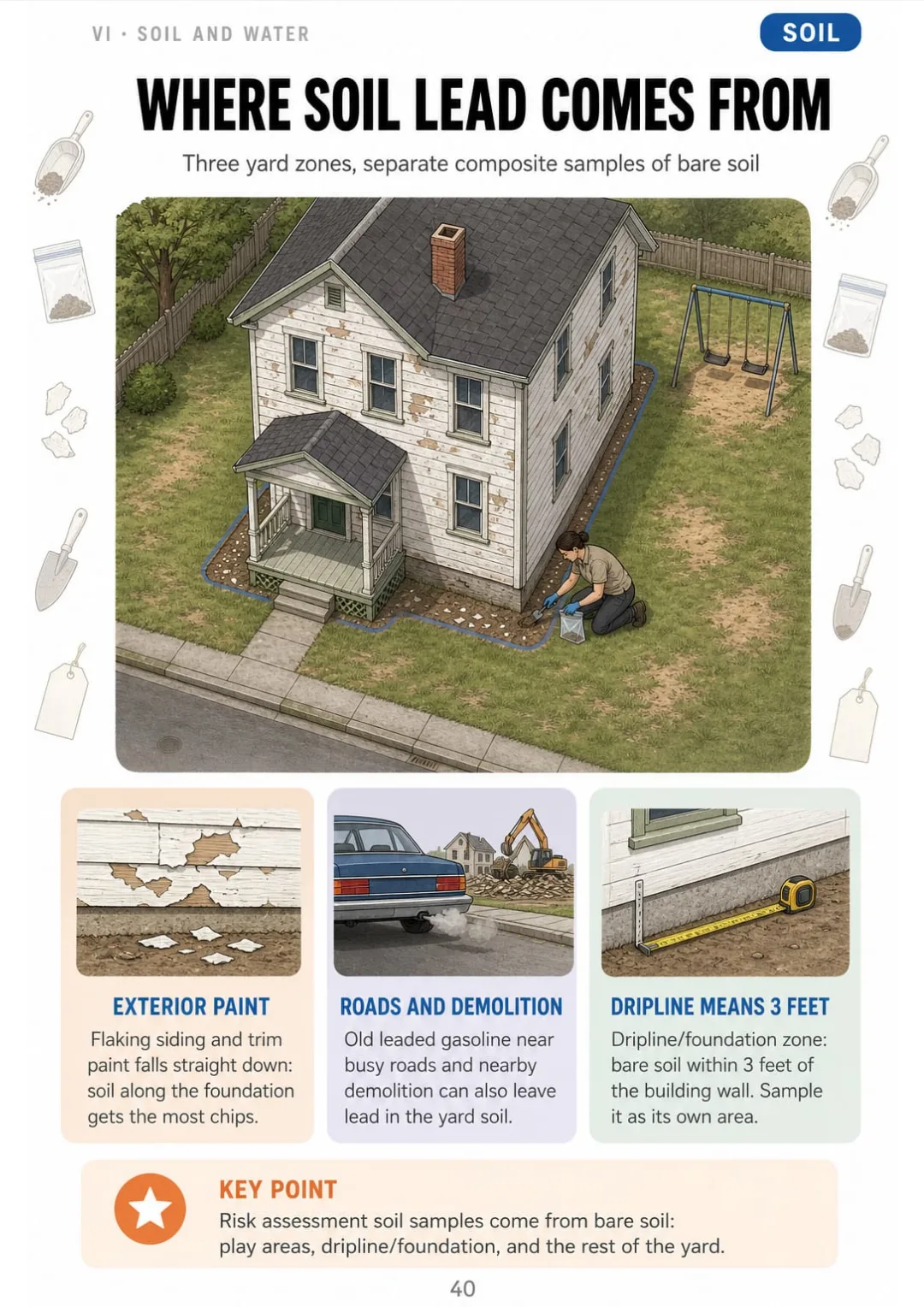
Play area, dripline within 3 ft of the wall, rest of the yard: bare soil only.
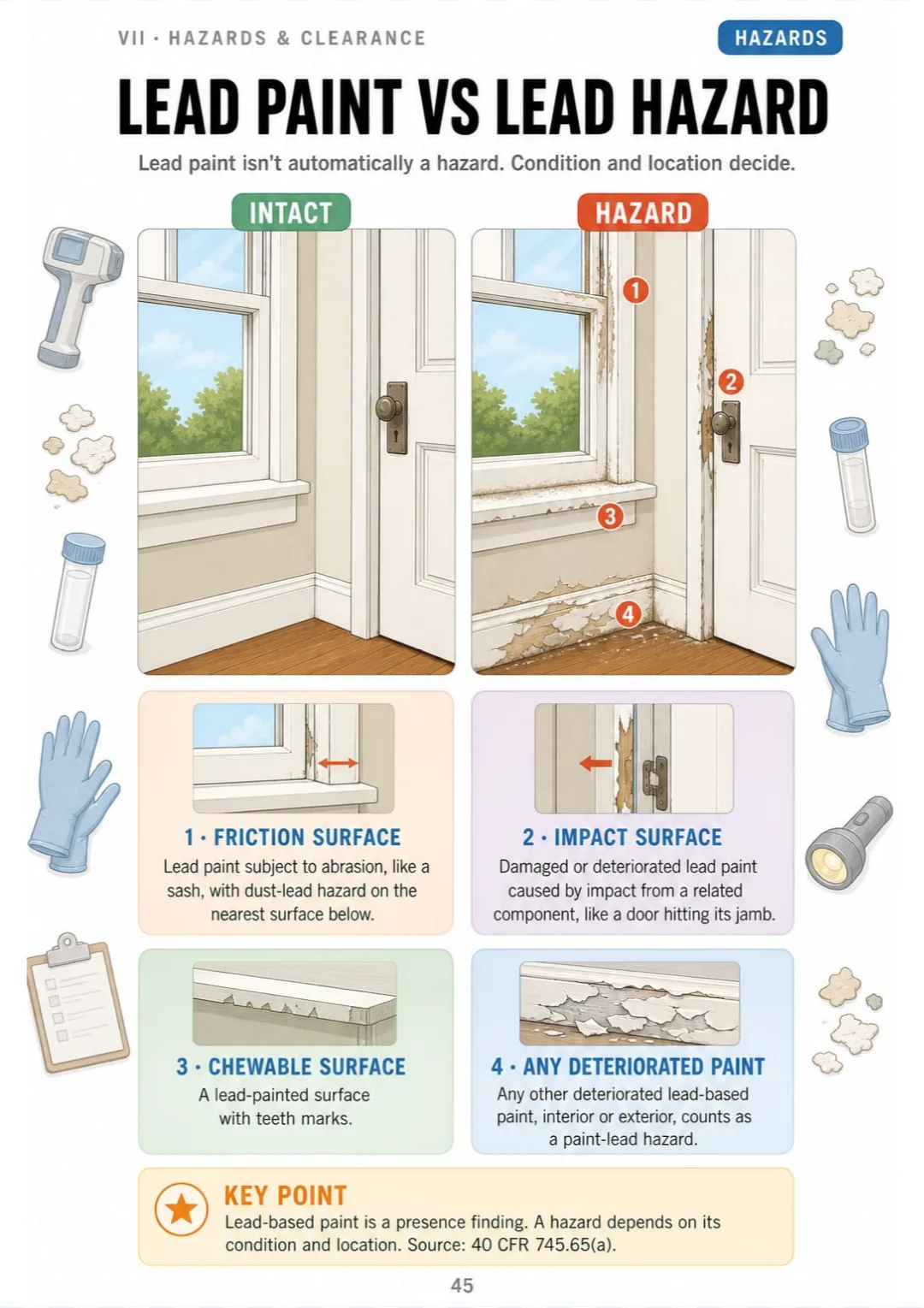
The four paint-lead hazard triggers under 40 CFR 745.65(a), drawn on one window
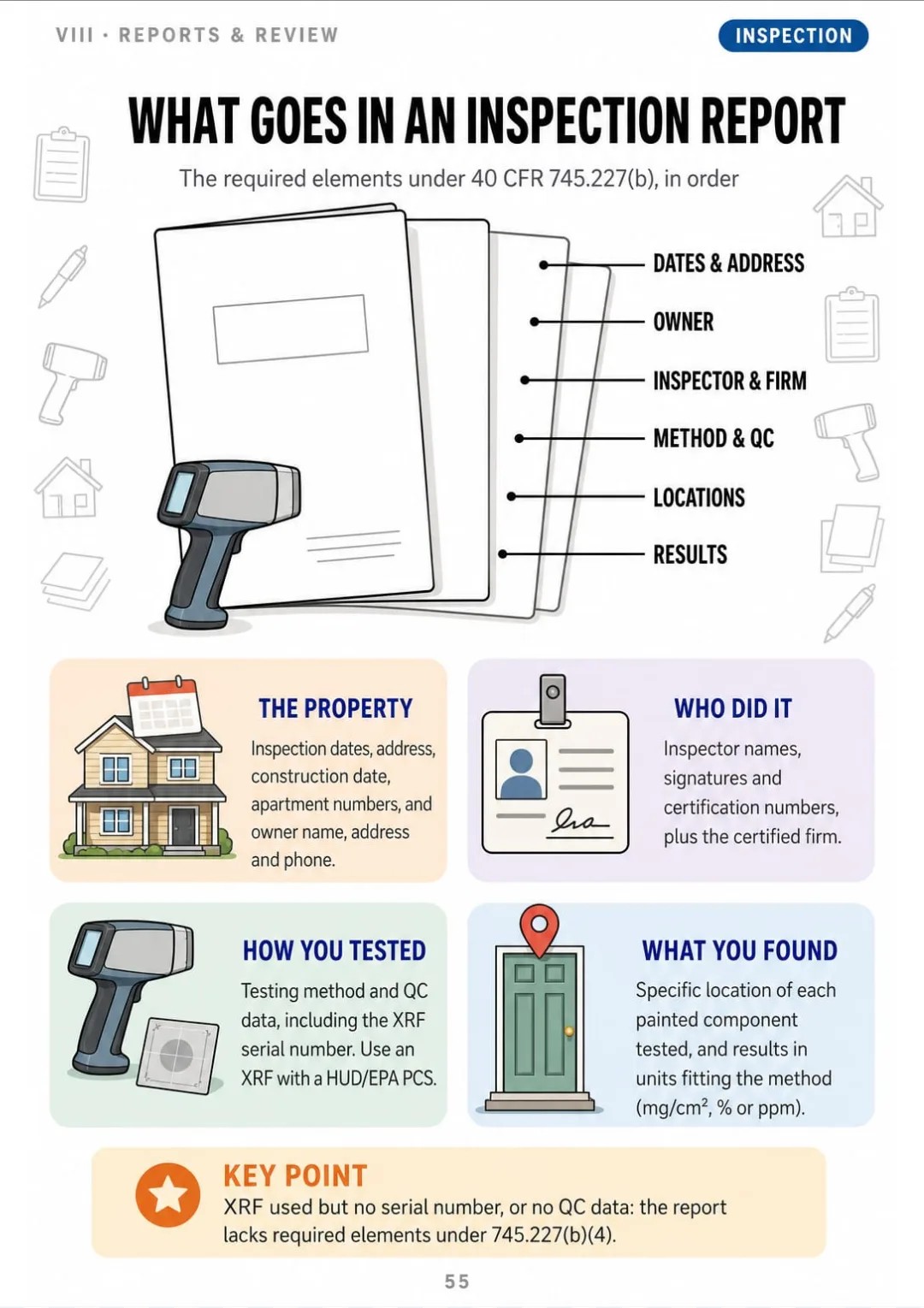
Inspection report: dates, owner, inspector cert numbers, method and QC (XRF serial), locations, results

Swipe to see more →

These are real pages from the book. The table of contents is the full one: 8 parts and 58 topics.

The Problem Isn't You. It's How It Was Explained to You.

You're kneeling at a window sill in a 1940s house with the XRF in your hand, and the owner asks what the reading on the screen actually means.

The course manual covered it in four dense pages: source, fluorescence, depth, substrate. You read every word, and on site none of it connects.

Source in, X-rays back, result in mg/cm² through all paint layers.

In this book the XRF is one drawing: the source goes in, X-rays come back, and the reading covers every paint layer. One line under it: 1.0 mg/cm² or more is lead-based paint.

The same goes for the PCS, the calibration checks, paint chips, dust wipes and clearance: each one has its own page.

You understand the reading, and you explain it to the owner without opening the manual.

COMPARE FOR YOURSELF

The Same Topic, Two Ways to Study It

THIS
  • The manual: line after line
  • Field procedures explained only in words
  • You walk into the exam unsure
The evaluation of a dwelling for lead-based paint hazards shall proceed in accordance with a defined sequence of activities, commencing with the collection of building history and occupant information, followed by a visual assessment of all painted components, after which testing by X-ray fluorescence or laboratory analysis of paint chip samples may be conducted, together with the collection of dust wipe and composite soil samples, the comparison of results against applicable hazard standards, the selection of control options, clearance procedures and the preparation of a written report.
FOR THIS
  • The whole field sequence in one drawing
  • The steps in a box, in order
  • You see it and you get it
History → visual → XRF/paint chips → dust → soil → standards → controls → clearance → report
CONTENTS

Take a Look at the 8 Parts and 58 Topics

The job and the rules, history and visual, XRF testing, paint chips, dust wipes, soil and water, hazards and clearance, and reports and exam review: 62 pages, all illustrated

IThe Job and the Rules · pp. 5-11
  1. Why Lead Still Matters in Pre-1978 Homes
  2. Who Writes the Rules: EPA, HUD, and Your State
  3. What Counts as Lead-Based Paint
  4. Target Housing and Child-Occupied Facilities
  5. Inspection vs Risk Assessment vs Lead Hazard Screen
  6. The Five Lead Disciplines and Who Does What
  7. Certification, Exam, and Refreshers
IIBefore You Test: History and Visual · pp. 12-17
  1. The Field Sequence You Will Use Every Time
  2. Building History and Owner Interview
  3. Room Equivalents: How You Divide the House
  4. Components and Testing Combinations
  5. Visual Assessment of Paint Condition
  6. Friction, Impact, and Chewable Surfaces
IIIXRF Testing · pp. 18-25
  1. How an XRF Reads Lead Through Paint
  2. The Performance Characteristic Sheet (PCS)
  3. Calibration Checks: Start, Every 4 Hours, End
  4. Substrate Correction and the Bare-Substrate Reading
  5. Positive, Negative, Inconclusive
  6. Where to Aim on Each Component
  7. Testing a Single Family Home vs Multifamily
  8. XRF Safety, Licensing, and Transport
IVPaint Chip Sampling · pp. 26-30
  1. When to Take a Paint Chip Instead of XRF
  2. How to Cut a Paint Chip Correctly
  3. Reporting Units: mg/cm², % by Weight, ppm
  4. Labeling, Chain of Custody, and Accredited Labs
  5. Repairing the Sampled Spot
VDust Wipe Sampling · pp. 31-39
  1. Why Dust Is the Number You Watch Most
  2. Floors, Sills, Troughs: Know the Three Surfaces
  3. Placing the 1 ft² Template on the Floor
  4. Measuring Sills and Troughs Without a Template
  5. The Wipe Pattern: S, Fold, S, Fold
  6. Single-Surface vs Composite Samples
  7. Which Rooms You Sample in a Risk Assessment
  8. Blanks, Spikes, and Field QC
  9. Reading Dust Results in µg/ft²
VISoil and Water · pp. 40-44
  1. Where Soil Lead Comes From and Where to Sample
  2. Composite Soil Sampling, Top Half Inch
  3. Soil Hazard Standards: 400 and 1,200 ppm
  4. Drinking Water: When It Fits In
  5. Other Sources You Note in the Report
VIIHazards, Controls, and Clearance · pp. 45-54
  1. Lead-Based Paint vs Lead-Based Paint Hazard
  2. Dust-Lead Standards After the 2024 Rule
  3. The Blood Lead Reference Value
  4. Interim Controls vs Abatement
  5. The Four Abatement Methods
  6. Prohibited Work Practices
  7. Abatement Notification and Occupant Protection
  8. Clearance Step 1: The Visual Check
  9. Clearance Step 2: Dust Samples and Pass/Fail
  10. RRP vs Abatement: Where the Line Is
VIIIReports, Records, and Exam Review · pp. 55-62
  1. What Goes in an Inspection Report
  2. What Goes in a Risk Assessment Report
  3. Disclosure Rule: Sellers, Landlords, and the 10 Days
  4. Records You Keep and for How Long
  5. Explaining Results to an Owner in Plain English
  6. The Numbers to Know Cold
  7. Terms That Get Mixed Up
  8. Your Truck Checklist for the First Inspections

One Page, One Topic, All Clear

Think of it this way:

It's your first risk assessment. There's a toddler in the unit, the sills are worn, and you have to decide which rooms get a dust wipe.

You open the page on which rooms you sample and see the house drawn from above, with the rooms marked and the template on the floor.

Since 2026: any reportable dust-lead on floors or sills is a hazard; clearance at 5/40/100 µg/ft².

Same with the XRF calibration checks, the paint chip cut, the soil dripline, the four abatement methods and the clearance visual check: each one on its own page.

Lead Inspector Illustrated is 8 parts and 58 topics, all drawn, ending with the numbers to know cold, the terms that get mixed up and a checklist for your truck.

What you see drawn, you don't have to memorize.

What's Inside Lead Inspector Illustrated:

Ipp. 5-11

The Job and the Rules

Why lead matters in pre-1978 homes, EPA, HUD and your state, what counts as lead-based paint, target housing, inspection vs risk assessment, the five disciplines and certification

IIpp. 12-17

Before You Test: History and Visual

The field sequence, building history and the owner interview, room equivalents, components and testing combinations, paint condition, and friction, impact and chewable surfaces

IIIpp. 18-25

XRF Testing

How the XRF reads lead, the PCS, calibration checks, substrate correction, positive, negative and inconclusive, where to aim, single-family vs multifamily and XRF safety

IVpp. 26-30

Paint Chip Sampling

When to take a paint chip, how to cut it, mg/cm², % by weight and ppm, chain of custody and accredited labs, and repairing the spot

Vpp. 31-39

Dust Wipe Sampling

Why dust matters most, floors, sills and troughs, the 1 ft² template, the wipe pattern, single-surface vs composite, which rooms, field QC and reading µg/ft²

VIpp. 40-44

Soil and Water

Where soil lead comes from, composite sampling in the top half inch, soil hazard standards, drinking water and the other sources you note

VIIpp. 45-54

Hazards, Controls, and Clearance

Lead paint vs lead hazard, the 2024 dust-lead rule, the blood lead reference value, interim controls vs abatement, the four abatement methods, prohibited practices, clearance and the RRP line

VIIIpp. 55-62

Reports, Records, and Exam Review

Inspection and risk assessment reports, the disclosure rule, record keeping, plain-English results for owners, the numbers to know, mixed-up terms and your truck checklist

At the end of the book: A page of numbers to know cold, the terms that get mixed up and a truck checklist for your first inspections.
Plus: 2 Free Books

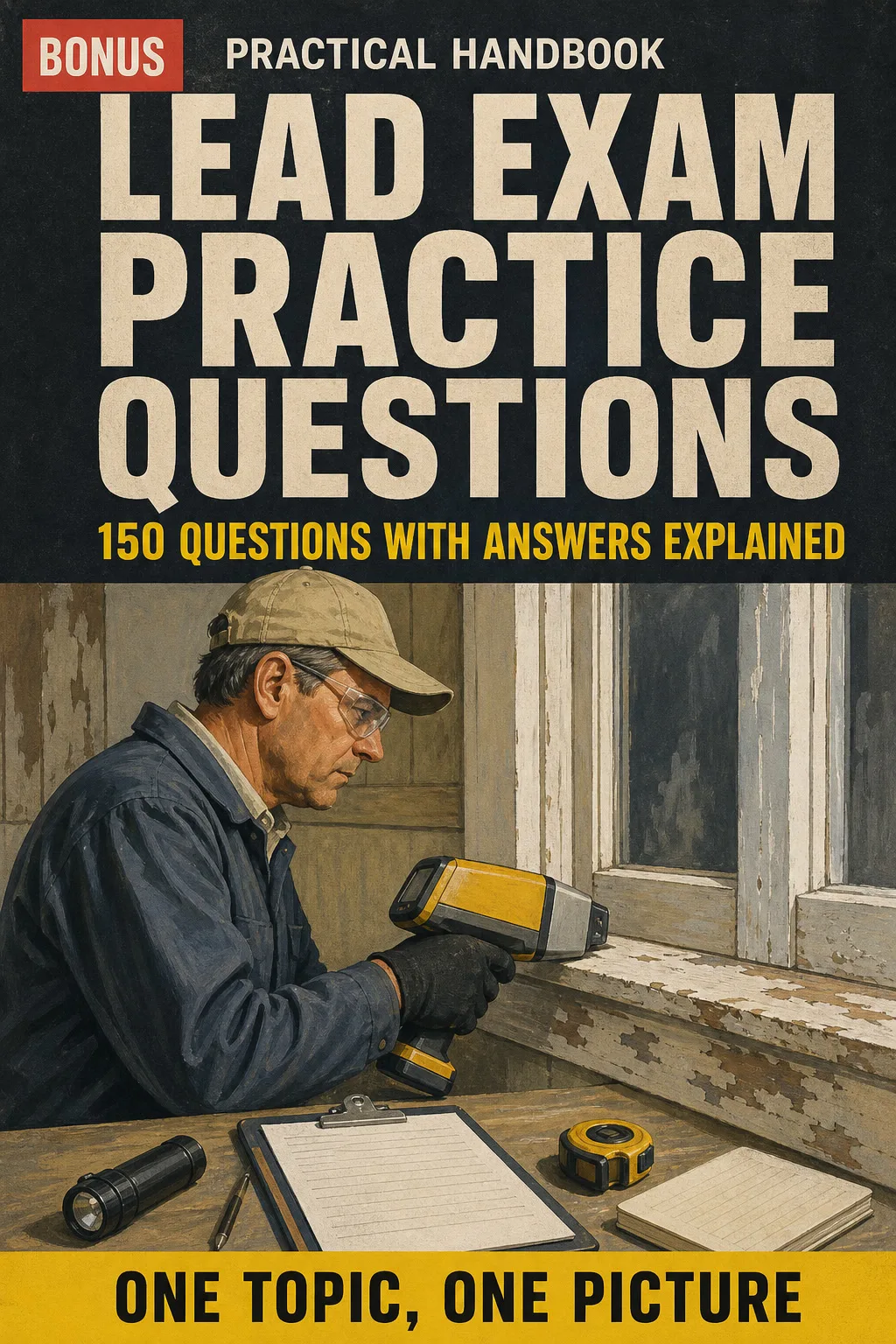
Lead Exam Practice Questions: 150 Questions with Answers Explained

BONUS 1: «Lead Exam Practice Questions: 150 Questions with Answers Explained»

Value on its own: US$ 17.90

Test yourself on XRF, sampling, hazard standards and clearance with exam-style questions, and see why each wrong answer is wrong, not just which one is right.

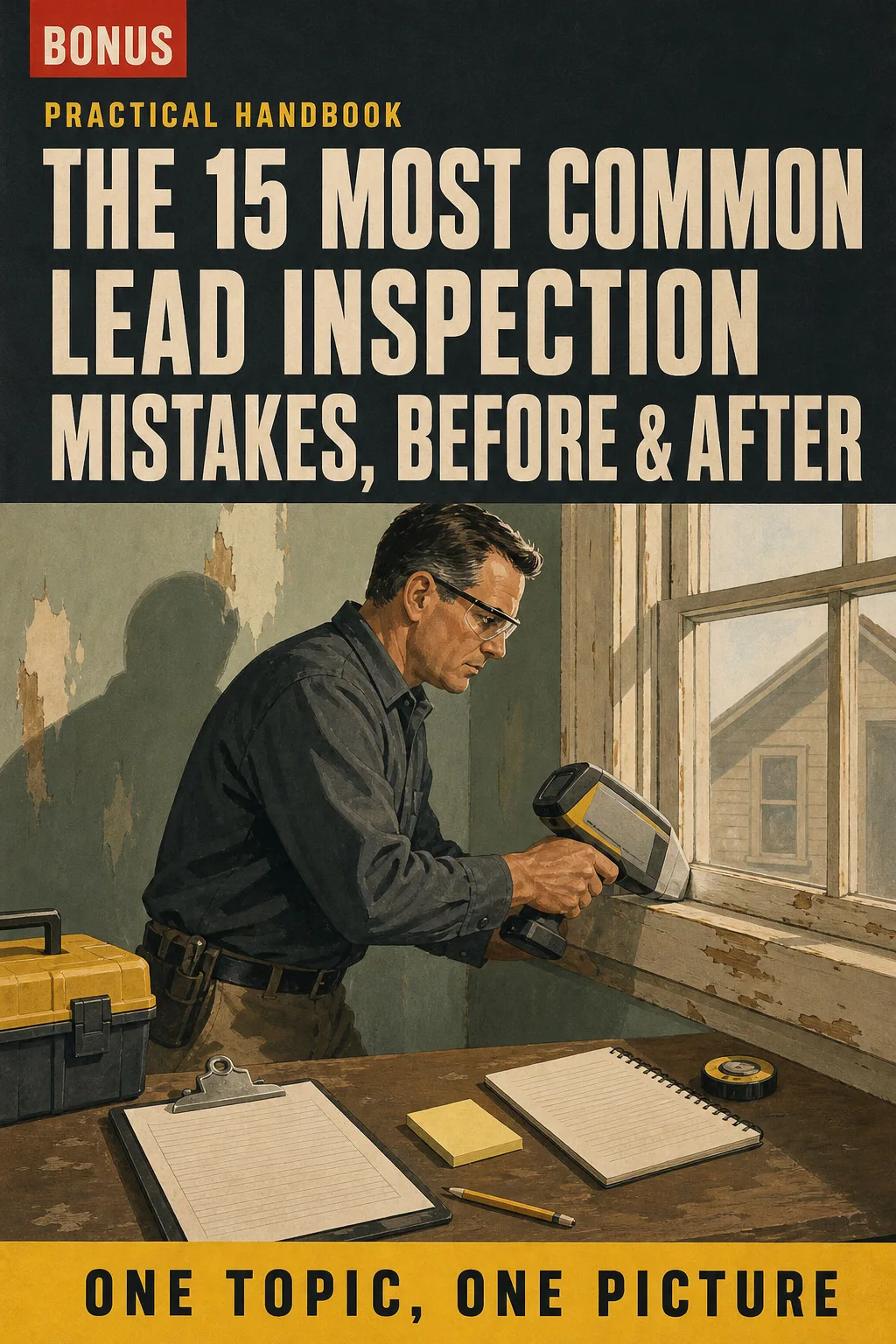
The 15 Most Common Lead Inspection Mistakes, Before & After

BONUS 2: «The 15 Most Common Lead Inspection Mistakes, Before & After»

Value on its own: US$ 14.90

See the errors that come up most often in the field (wrong template placement, mixing up inspection and risk assessment, skipping room equivalents), each one drawn next to the right way.

Lead Inspector Illustrated with 2 Free Books

  • Lead Inspector Illustrated: 62 illustrated pagesUS$ 63
  • BONUS 1: Lead Exam Practice Questions: 150 Questions with Answers ExplainedUS$ 17.90
  • BONUS 2: The 15 Most Common Lead Inspection Mistakes, Before & AfterUS$ 14.90
  • High-resolution PDF to printIncluded
Total value US$ 95.80
YOUR PRICE:
US$ 27
You save US$ 68.80
YES, I WANT LEAD INSPECTOR ILLUSTRATED FOR US$ 27

📄 This is a digital PDF book sent to your email: nothing is printed or shipped.

Secure purchaseEncrypted payment30-day guarantee

PDF by email: We email you Lead Inspector Illustrated as a PDF, together with the two free books. It's a single payment: no installments, no extra charges.

Who This Book Is For

You're taking the accredited course

You're taking the accredited course

Each day's topics sit on their own page, so the course manual finally has an order you can follow.

Your exam is a few weeks away

Your exam is a few weeks away

Review the whole job in the same order, from the XRF to clearance, with the values you need to check in one box.

You're doing your first inspections

You're doing your first inspections

Print it, keep it in the truck, and check which surface to sample or which unit to report before you start.

Everything You Get Today

US$ 95.80US$ 27
YES, I WANT LEAD INSPECTOR ILLUSTRATED FOR US$ 27

📄 This is a digital PDF book sent to your email: nothing is printed or shipped.

30DAYS
GUARANTEE

30-Day Guarantee

Try Lead Inspector Illustrated for 30 days, bonus books included.

We refund everything if the file won't open, if the book isn't what you see here, if you were charged twice or if the email doesn't arrive. Just email us.

You pay once. No subscriptions.

Frequently Asked Questions

Is it for me if I already work in old houses and the lead exam is coming up?

Yes. It's for home inspectors, RRP renovators, maintenance supervisors and environmental techs preparing for the lead inspector or risk assessor exam, whether EPA or your state runs it. It follows the federal rules; where your state adds its own, check your state program. It isn't basic: it puts what the course covers in field order, one drawing per topic.

Where does the content come from?

From EPA's 40 CFR Part 745, HUD's 24 CFR Part 35 and the HUD Guidelines (2012 edition). The dust values follow EPA's October 2024 dust-lead rule: a dust-lead hazard is now any reportable level on floors and window sills, and clearance uses dust-lead action levels of 5 µg/ft² for floors, 40 for sills and 100 for troughs. Every value names the rule it comes from, so you can check it against the current text and your state program.

Does it work for my state's exam, or only the federal one?

It follows the federal rules every state program is built on: EPA's 40 CFR Part 745 and HUD's 24 CFR Part 35. EPA-authorized states run their own certification and exam, and some states and cities use stricter numbers, so the pages mark where your state can differ and you check it against your state program. It's an independent study book, not issued or endorsed by EPA, HUD, any state program or any training provider.

Does it replace the accredited course?

No. Certification takes an accredited course and the exam set by EPA or your state. This book helps you review the job and keep it in order.

Are the practice questions the ones on the exam?

No. The 150 questions were written for this book, in exam style, with every answer explained. They are not official exam questions.

When and how do I get it?

The book and the 2 bonus books arrive as PDFs by email, at the address you enter at checkout.

Do I have to pay every month?

No. It's a one-time payment, with no subscription.

Can I have it on paper?

Yes. It's a printable PDF: print the whole book or just the pages you want to keep in the truck.

How does the refund work?

You have 30 days. We refund everything if the file won't open, if the book isn't what you see on this page, if you were charged twice or if the email doesn't arrive: just email us.

Before You Close This Page

No more rereading without anything sticking.

The XRF, the dust template and the soil dripline: you see them drawn, and it clicks.

You walk into the exam, and the first house, knowing where everything is.

Drawings make studying faster.

The book is right below.

One-time payment: US$ 27 · Guarantee: 30 days · PDF by email

YES, I WANT LEAD INSPECTOR ILLUSTRATED FOR US$ 27

📄 This is a digital PDF book sent to your email: nothing is printed or shipped.